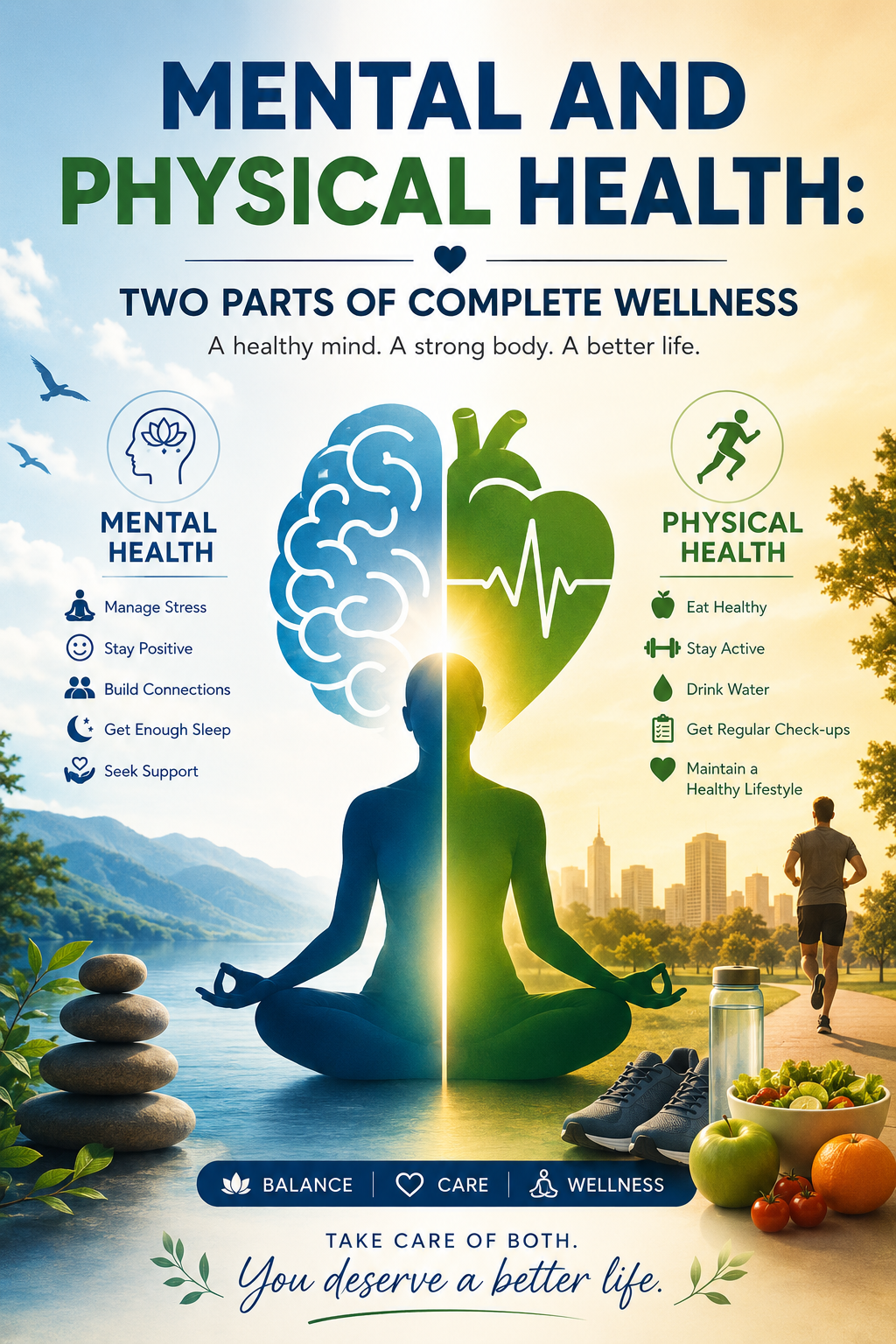
Why Mental Health Is Just as Important as Physical Health
A Healthy Mind Is the Foundation of a Healthy Life
When people think about health, they often focus on maintaining a healthy weight, eating nutritious food, exercising regularly, or preventing physical illnesses. While these habits are essential, one equally important aspect of health is often overlooked—mental health.
Mental health is not simply the absence of mental illness. It is the ability to think clearly, manage emotions, cope with stress, build healthy relationships, make informed decisions, and enjoy daily life. Just as physical health influences how your body functions, mental health affects the way you think, feel, and respond to the world around you.
In today's fast-paced world, where work pressure, financial responsibilities, social expectations, and constant digital connectivity have become part of everyday life, caring for your mental well-being is no longer optional—it is essential.
Key Takeaways
Mental health is just as important as physical health for overall well-being.
Emotional stress can affect the body and increase the risk of various physical illnesses.
Good mental health improves relationships, productivity, decision-making, and quality of life.
Early recognition and treatment of mental health concerns can prevent long-term complications.
Homeopathy may be considered as part of a holistic approach for selected individuals under professional guidance, but mental health conditions should always be properly evaluated by qualified healthcare professionals.
What Is Mental Health?
Mental health refers to a person's emotional, psychological, and social well-being. It influences how we handle stress, communicate with others, make decisions, and adapt to life's challenges.
Good mental health does not mean feeling happy all the time. Every person experiences sadness, anxiety, disappointment, or frustration at some point. The difference lies in how effectively we cope with these emotions and continue functioning in daily life.
When mental health is affected, even simple tasks such as concentrating at work, maintaining relationships, or enjoying hobbies can become difficult.
Mental Health and Physical Health Are Deeply Connected
The mind and body constantly influence one another. What affects one often affects the other.
For example, chronic stress can raise blood pressure, disturb digestion, weaken the immune system, disrupt sleep, and contribute to headaches or muscle tension. Similarly, living with a chronic physical illness such as diabetes, arthritis, or heart disease may increase the risk of anxiety or depression.
Research has consistently shown that mental and physical health should never be viewed separately. They are two essential parts of the same overall picture.
Why Mental Health Matters
Good mental health supports nearly every aspect of life.
It helps you:
Build healthy relationships.
Make better decisions.
Handle stress more effectively.
Stay productive at work or school.
Sleep better.
Improve concentration and memory.
Develop resilience during difficult times.
Enjoy greater life satisfaction.
When mental health is neglected, these areas often begin to suffer.
Common Signs That Your Mental Health May Need Attention
Everyone experiences emotional ups and downs, but persistent changes may indicate that professional support is needed.
Some warning signs include:
Feeling sad or hopeless for several weeks.
Constant worry or excessive anxiety.
Loss of interest in activities you once enjoyed.
Difficulty concentrating.
Changes in appetite or weight.
Trouble sleeping or sleeping excessively.
Feeling emotionally exhausted.
Increased irritability or anger.
Withdrawal from family and friends.
Difficulty managing everyday responsibilities.
Recognizing these signs early allows individuals to seek help before symptoms become more severe.
Stress: The Silent Health Challenge
Stress is a natural response to demanding situations. In small amounts, it helps us stay alert and motivated. However, when stress becomes chronic, it can affect almost every organ in the body.
Long-term stress has been linked to:
High blood pressure.
Heart disease.
Digestive disorders.
Chronic headaches.
Muscle pain.
Weakened immunity.
Hormonal imbalance.
Anxiety and depression.
Sleep disturbances.
Learning healthy ways to manage stress is one of the most valuable investments in both mental and physical health.
The Impact of Poor Mental Health on the Body
Mental health challenges often produce physical symptoms that people may not immediately recognize.
These can include:
Constant fatigue.
Frequent headaches.
Stomach discomfort.
Chest tightness.
Rapid heartbeat.
Muscle aches.
Poor digestion.
Low energy.
Reduced immunity.
Because these symptoms may resemble physical illnesses, professional evaluation is important to identify their underlying cause.
Mental Health in the Digital Age
Technology has transformed the way we work, communicate, and learn. While it offers many benefits, excessive screen time and constant social media exposure may also affect mental well-being.
Comparing ourselves to unrealistic online lifestyles, spending long hours on digital devices, and being constantly available through notifications can contribute to stress, anxiety, poor sleep, and emotional exhaustion.
Taking regular breaks from screens and maintaining healthy boundaries with technology can improve emotional well-being.
Lifestyle Habits That Support Better Mental Health
Mental wellness is influenced by everyday choices.
Healthy habits include:
Sleeping seven to nine hours each night.
Exercising regularly.
Eating a balanced, nutritious diet.
Staying hydrated.
Practicing mindfulness or meditation.
Spending time outdoors.
Maintaining supportive relationships.
Limiting alcohol and avoiding tobacco or recreational drugs.
Setting realistic goals.
Taking breaks when needed.
Small daily habits often have a greater long-term impact than occasional major changes.
Breaking the Stigma Around Mental Health
Despite growing awareness, many people still hesitate to seek help because they fear being judged or misunderstood.
Mental health conditions are medical conditions—not signs of weakness, laziness, or lack of willpower.
Seeking professional support is a responsible step toward recovery, just as consulting a doctor for asthma, diabetes, or high blood pressure is.
The earlier someone receives appropriate care, the better the chances of improvement.
When Should You Seek Professional Help?
You should consider consulting a qualified healthcare professional if:
Emotional distress lasts longer than two weeks.
Anxiety or sadness interferes with daily life.
You experience panic attacks.
Sleep problems persist.
You find it difficult to work, study, or maintain relationships.
You feel overwhelmed by stress.
You experience thoughts of harming yourself or others.
Early intervention can significantly improve outcomes and quality of life.
A Doctor's Perspective on Homeopathy
Homeopathy considers emotional health as an important part of the overall health picture. During consultation, a qualified homeopathic physician evaluates physical symptoms alongside emotional well-being, stress levels, sleep patterns, and lifestyle factors to provide individualized care.
However, it is important to recognize that mental health conditions require proper medical evaluation. Conditions such as major depression, anxiety disorders, bipolar disorder, schizophrenia, or severe psychological distress should always be assessed by qualified mental health professionals. Homeopathy may be considered as part of a broader, individualized healthcare plan where appropriate and under professional supervision.
Building a Mentally Healthy Lifestyle
Improving mental health does not happen overnight, but consistent small steps can make a meaningful difference.
Start by prioritizing sleep, staying physically active, maintaining healthy relationships, eating nutritious meals, reducing unnecessary stress, and allowing yourself time to rest. Don't hesitate to ask for support from trusted family members, friends, or healthcare professionals when needed.
Remember, taking care of your mental health is not selfish—it is one of the most important investments you can make in yourself.
Final Thoughts
Your mind and body work together every single day. When one suffers, the other often does too. Just as you would not ignore persistent chest pain or high fever, you should not ignore prolonged stress, anxiety, sadness, or emotional exhaustion.
Mental health is not a luxury, and it is not something to address only during times of crisis. It is a vital part of living a healthy, balanced, and fulfilling life.
Caring for your mental well-being today can improve your relationships, strengthen your physical health, enhance your resilience, and help you enjoy a better quality of life for years to come.
Disclaimer: This article is intended for educational purposes only and should not replace professional medical advice, diagnosis, or treatment. If you are experiencing persistent emotional distress or symptoms of a mental health condition, consult a qualified mental health professional or healthcare provider for appropriate evaluation and support.