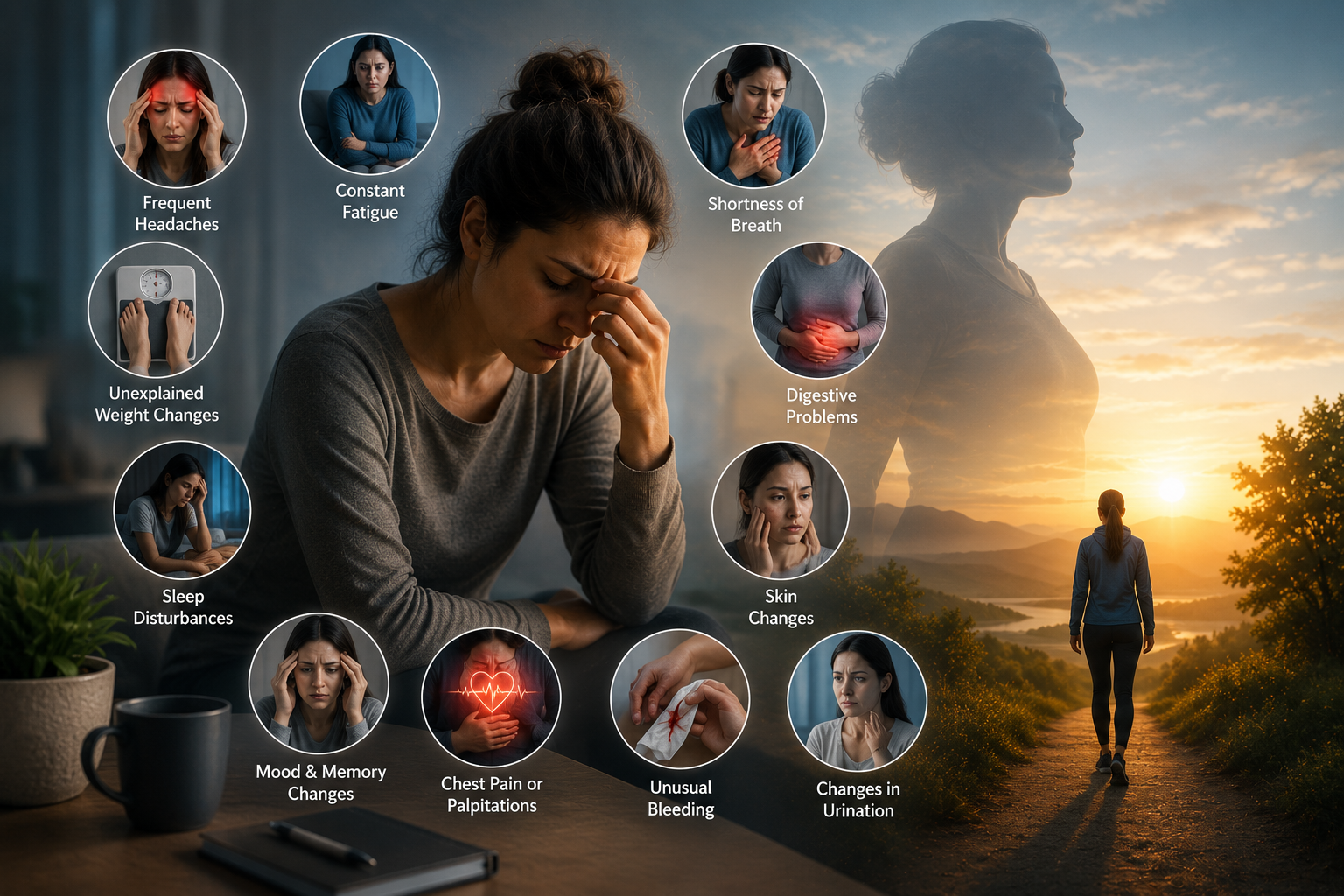
Understanding Menopause: Physical and Emotional Changes
Menopause is a natural stage of life that marks the end of menstrual periods and reproductive years. It occurs because the ovaries gradually produce less of the hormones involved in the menstrual cycle. Menopause is usually experienced between the ages of 45 and 55, although it can happen earlier.
The transition toward menopause is called perimenopause. During this period, hormone levels fluctuate and periods may become irregular before eventually stopping. Menopause is generally defined as having no menstrual period for 12 consecutive months when hormonal contraception is not affecting the cycle.
Every woman's experience is different. Some women have only mild symptoms, while others experience several physical and emotional changes that can affect daily life.
What Happens During Menopause?
As hormone levels change, the menstrual cycle becomes less predictable. Periods may become lighter or heavier, occur closer together or farther apart, and eventually stop.
Menopause can also affect several other areas of health, including sleep, mood, skin, hair, sexual health, and bone health.
Understanding these changes can help women recognize what may be happening and know when to seek professional support.
Common Physical Changes During Menopause
1. Changes in Menstrual Periods
One of the earliest signs of perimenopause is often a change in the usual menstrual pattern.
Periods may:
- Become irregular
- Occur more frequently
- Become farther apart
- Become heavier
- Become lighter
- Eventually stop
These changes can occur over several years before the final menstrual period.
2. Hot Flushes and Night Sweats
Hot flushes are sudden feelings of warmth, often affecting the face, neck, and chest. They may be accompanied by sweating, dizziness, anxiety, or noticeable heartbeats.
When they occur during sleep, they are commonly called night sweats. They can sometimes interrupt sleep and contribute to daytime tiredness.
3. Sleep Problems
Some women experience difficulty falling asleep or staying asleep during perimenopause and menopause.
Night sweats can contribute to disrupted sleep, while hormonal changes and emotional symptoms may also make it harder to rest properly.
Poor sleep may then contribute to tiredness, irritability, difficulty concentrating, and increased stress.
4. Changes in Skin and Hair
Hormonal changes can be associated with changes in the skin and hair.
Some women may experience:
- Dry or itchy skin
- Changes in skin texture
- Hair thinning
- Hair loss
- Increased facial hair
Not every skin or hair change is caused by menopause, so persistent or sudden changes should be discussed with a healthcare professional.
5. Vaginal Dryness and Sexual Health Changes
Lower hormone levels during and after menopause can contribute to vaginal dryness, irritation, itching, and discomfort.
Some women may also experience pain during sexual activity or a reduced sex drive.
These symptoms are common but should not simply be accepted as something that cannot be treated. Healthcare professionals can discuss suitable treatment options.
6. Joint and Muscle Discomfort
Some women experience muscle aches and joint pain during menopause.
Regular movement and appropriate physical activity can support overall physical health. If pain is persistent, severe, or affecting everyday activities, medical evaluation may be appropriate.
7. Changes in Weight and Body Shape
Weight gain can occur during perimenopause and menopause, and some women notice changes in where body fat is distributed.
Healthy eating, regular physical activity, adequate sleep, and stress management can support overall health during this stage.
Emotional and Mental Changes During Menopause
Menopause is not only a physical transition. Emotional and mental changes can also occur.
1. Mood Changes
Some women experience:
- Mood swings
- Irritability
- Low mood
- Anxiety
- Feeling more emotional
- Reduced confidence
Hormonal changes can contribute to these symptoms, while sleep problems, physical symptoms, relationships, work pressures, and other life circumstances can also influence emotional well-being.
2. Anxiety and Increased Worry
Some women notice increased anxiety during perimenopause.
Physical symptoms such as hot flushes and sleep disruption can contribute to stress, while changing hormones and everyday life pressures may also affect emotional health.
If anxiety becomes persistent or interferes with daily activities, professional support can be helpful.
3. Memory and Concentration Problems
Some women describe difficulty concentrating or what is commonly called "brain fog."
You may notice:
- Difficulty remembering things
- Trouble concentrating
- Forgetfulness
- Difficulty finding the right words
- Reduced mental focus
These symptoms can sometimes feel worse when sleep is poor or when a woman is experiencing significant fatigue.
4. Changes in Confidence and Self-Esteem
Physical changes, sleep difficulties, changes in sexual health, and emotional symptoms can sometimes affect how women feel about themselves.
Maintaining supportive relationships, staying physically active, taking time for enjoyable activities, and discussing persistent emotional difficulties with a healthcare professional can help.
Menopause and Bone Health
Changes in hormone levels during menopause are also associated with loss of bone density, which can increase the risk of osteoporosis.
Lifestyle habits that support bone health include regular weight-bearing and resistance exercise, a balanced diet containing adequate calcium, and appropriate vitamin D intake.
Women should discuss individual bone-health needs with their healthcare professional, particularly when menopause occurs earlier than expected or other risk factors are present.
How Can Women Manage Menopause Symptoms?
There is no single approach that works for every woman. Lifestyle changes can support general health and may help with some symptoms.
Eat a Balanced Diet
Include a variety of:
- Vegetables and fruits
- Whole grains
- Protein-rich foods
- Calcium-rich foods
- Healthy fats
A balanced diet supports overall health and bone strength.
Stay Physically Active
Regular exercise can support physical and emotional well-being.
Walking, strength training, yoga, swimming, cycling, and other suitable activities can be included according to individual ability and preferences.
Weight-bearing and resistance exercises are particularly useful for supporting bone health.
Maintain a Healthy Sleep Routine
Try to maintain consistent sleeping and waking times and create a relaxing bedtime routine.
Keeping the bedroom cool may also be helpful for women experiencing night sweats.
Practice Relaxation Techniques
Relaxation activities such as yoga, meditation, and similar practices may help support mental well-being and stress management.
Stay Connected
Talking to friends, family members, colleagues, or others going through menopause can provide emotional support.
You do not have to manage every change alone.
Medical Treatment Options
Women experiencing troublesome symptoms can discuss treatment options with a healthcare professional.
Hormone replacement therapy (HRT) is one option that may help manage several menopause symptoms. Depending on individual circumstances, other hormonal and non-hormonal treatments may also be considered.
Treatment should be individualized because the appropriate option depends on factors such as symptoms, medical history, age, whether the uterus is present, and individual risks and preferences.
Herbal remedies and complementary products are also marketed for menopause, but evidence regarding their effectiveness and safety varies. It is advisable to discuss these products with a healthcare professional before using them.
When Should You Seek Medical Advice?
Menopause is a natural process, but some symptoms should be evaluated.
Speak with a healthcare professional if:
- Menopause symptoms are significantly affecting daily life.
- You experience severe or persistent mood changes.
- Sleep problems continue for a prolonged period.
- Hot flushes or night sweats are difficult to manage.
- You experience significant vaginal or urinary symptoms.
- Menopause symptoms occur before the age of 45.
- You experience vaginal bleeding after menopause.
Any vaginal bleeding after 12 months without a period should be medically assessed, even if it occurs only once or is just light spotting.
Early and Premature Menopause
Menopause before the age of 45 is considered early menopause, while menopause before the age of 40 is considered premature menopause.
Earlier menopause can have implications for bone and cardiovascular health and may affect fertility. Women experiencing menopause symptoms at a younger age should seek professional evaluation.
Final Thoughts
Menopause is a natural transition, not an illness. However, the physical and emotional changes associated with it can sometimes have a significant effect on everyday life.
Changes in periods, hot flushes, sleep difficulties, vaginal dryness, skin and hair changes, mood changes, anxiety, and concentration problems are among the symptoms women may experience.
A healthy lifestyle, emotional support, and appropriate medical care can help women navigate this stage of life more comfortably.
Understanding menopause can help women recognize changes in their bodies, make informed health decisions, and seek support when symptoms begin to interfere with everyday life.