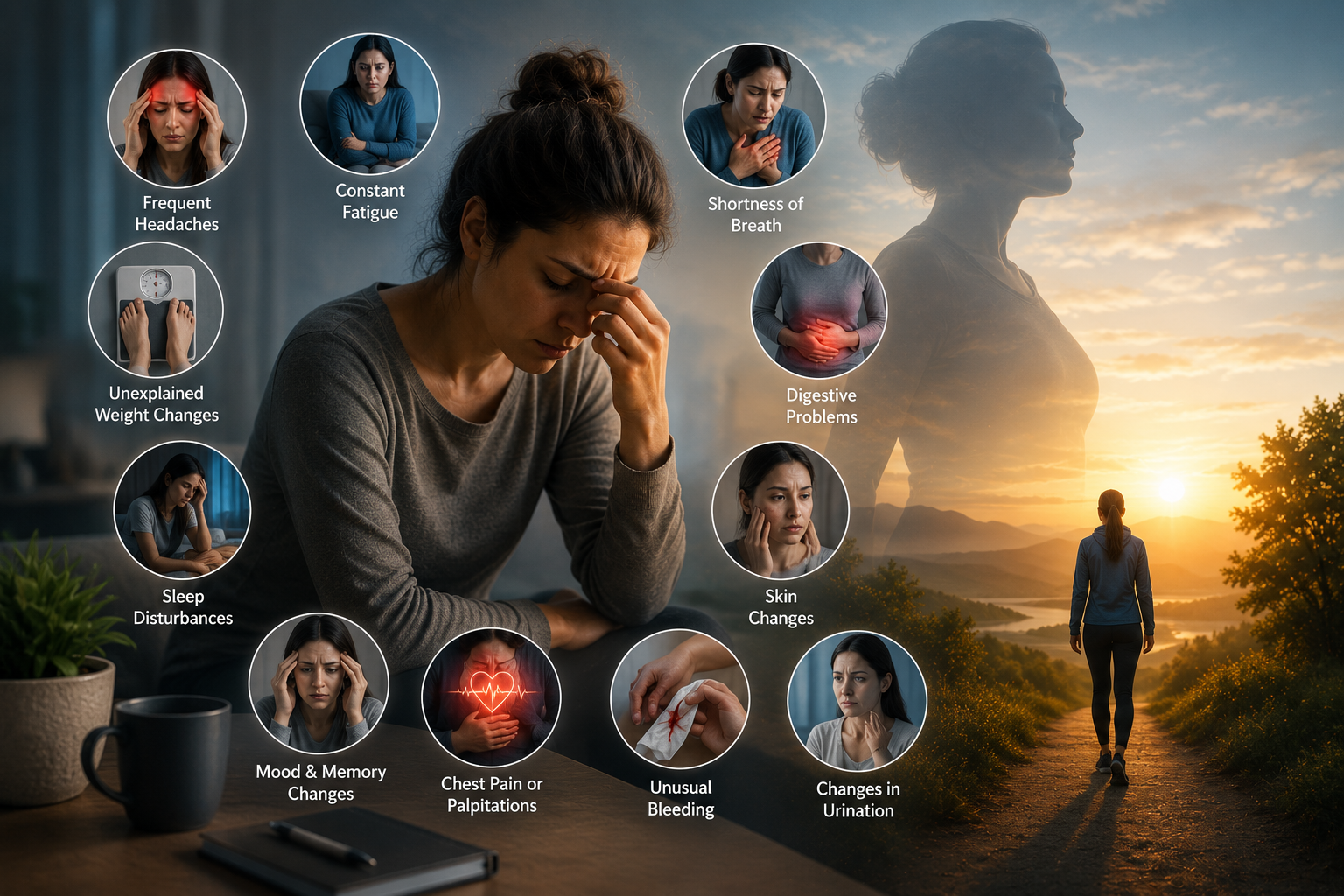
Common Signs of Hormonal Imbalance Women Should Not Ignore
Hormones act as chemical messengers that help regulate many functions in the body, including metabolism, reproduction, menstrual cycles, mood, sleep, and growth. Because hormones influence so many systems, changes in hormone levels can sometimes appear through symptoms affecting different parts of the body.
Women may notice hormonal changes during puberty, the menstrual cycle, pregnancy, after childbirth, perimenopause, and menopause. Medical conditions such as polycystic ovary syndrome (PCOS) and thyroid disorders can also affect hormone-related symptoms.
It is important to remember that the phrase "hormonal imbalance" is broad. Symptoms such as fatigue, weight changes, acne, or irregular periods can have many possible causes. They should not automatically be assumed to result from a hormone problem.
What Does Hormonal Imbalance Mean?
Hormonal imbalance generally refers to hormone levels that are too high or too low for the body's needs. Different hormones perform different functions, so symptoms depend on which hormone or hormonal system is affected.
For example, thyroid disorders can affect energy, body weight, temperature tolerance, bowel habits, hair, and menstrual periods. PCOS can be associated with irregular periods, increased androgen activity, acne, and excess facial or body hair.
Common Signs Women Should Pay Attention To
1. Irregular or Unpredictable Periods
Changes in the menstrual cycle are among the most noticeable signs that something may need attention.
Periods may:
- Come earlier or later than usual
- Become less frequent
- Occur more frequently
- Become unusually heavy or light
- Last longer than usual
- Stop for several months
Irregular periods can have many causes, including pregnancy, stress, significant weight changes, excessive exercise, hormonal contraception, PCOS, thyroid disorders, and the transition toward menopause.
A change in your usual menstrual pattern is worth discussing with a healthcare professional, particularly when it continues.
2. Unexplained Weight Changes
Unexpected weight gain or weight loss can sometimes occur alongside hormonal or metabolic conditions.
For example, an underactive thyroid may be associated with weight gain, while an overactive thyroid can be associated with weight loss.
However, changes in weight can also result from diet, activity levels, medications, stress, sleep, and many other factors. Weight change alone does not confirm a hormonal problem.
3. Persistent Fatigue
Feeling tired after a busy day is normal. Persistent or unusual fatigue, however, deserves attention.
Thyroid disorders are one possible cause of ongoing fatigue. An underactive thyroid may cause tiredness or weakness, while an overactive thyroid can also cause fatigue.
If fatigue continues despite adequate rest, a healthcare professional can help determine whether there is an underlying cause.
4. Acne and Oily Skin
Hormonal changes can influence oil production in the skin.
Persistent or severe acne, particularly acne that develops after adolescence, can sometimes occur alongside increased androgen activity. PCOS is one condition associated with severe acne and oily skin.
Acne can also have many other causes, so it should not automatically be considered evidence of hormonal imbalance.
5. Increased Facial or Body Hair
Some women naturally have more body or facial hair than others. However, new or noticeably increased coarse hair growth on areas such as the face, chest, abdomen, or thighs can sometimes be associated with higher androgen levels.
PCOS is one condition in which increased androgen activity may contribute to excess hair growth.
Sudden or rapidly increasing facial or body hair should be evaluated by a healthcare professional.
6. Hair Thinning or Hair Loss
Changes in hormone levels can sometimes be associated with changes in hair growth.
Hair thinning can also occur with thyroid disorders. ACOG lists hair loss among possible symptoms of hypothyroidism.
Hair loss has many possible causes, including genetics, nutritional deficiencies, illness, stress, medications, and hormonal changes. Identifying the underlying cause is important before choosing treatment.
7. Changes in Mood
Hormonal changes may be associated with mood changes during certain stages of life.
During perimenopause, for example, some women experience mood changes along with menstrual changes, hot flashes, sleep problems, or other symptoms.
Mood changes can also result from stress, sleep problems, relationship difficulties, anxiety, depression, medications, and other health conditions. Persistent or severe changes should be discussed with a healthcare professional.
8. Sleep Problems
Difficulty falling asleep, waking frequently, or feeling tired despite sleeping can have many causes.
During perimenopause, sleep problems can occur alongside night sweats and hot flashes.
Thyroid conditions and other health problems can also affect sleep and energy. If sleep difficulties persist, it is worth investigating the underlying cause rather than assuming hormones are responsible.
9. Changes in Body Temperature or Sweating
Feeling unusually hot, experiencing excessive sweating, or becoming more sensitive to cold can sometimes occur with hormonal or thyroid changes.
For example, ACOG lists feeling unusually cold among symptoms of hypothyroidism and increased sweating and feeling unusually hot among symptoms associated with hyperthyroidism.
During menopause, hot flashes and night sweats are also common symptoms.
10. Changes in Fertility
Hormonal changes can affect ovulation, which may influence fertility.
PCOS can cause irregular ovulation and is one of the common causes of infertility.
Women who have irregular periods and are having difficulty becoming pregnant should discuss their situation with a healthcare professional.
Hormonal Changes During Different Life Stages
Hormonal fluctuations are a normal part of a woman's life.
Puberty
Hormonal changes during puberty lead to the development of reproductive functions and can also contribute to changes in skin, hair, and menstrual patterns.
Pregnancy
Pregnancy causes major hormonal changes that support the developing pregnancy and affect many aspects of the body.
Postpartum Period
After childbirth, hormone levels change significantly. Women may experience physical and emotional changes during recovery.
Perimenopause
Perimenopause is the transition toward menopause. Changes in menstrual bleeding are often among the first signs, followed by symptoms such as hot flashes, sleep problems, vaginal dryness, and mood changes in some women.
Menopause
Menopause is confirmed after a woman has gone 12 months without a menstrual period. Hormonal changes during this stage can affect several areas of health and well-being.
When Should You See a Healthcare Professional?
You should consider seeking medical advice if symptoms are persistent, unusual, worsening, or affecting your daily life.
In particular, speak with a healthcare professional if you experience:
- Repeatedly irregular periods
- Periods lasting more than seven days
- Very heavy menstrual bleeding
- Bleeding between periods
- Missing periods repeatedly
- Unexplained weight changes
- Significant hair loss
- New or excessive facial hair
- Persistent severe acne
- Ongoing fatigue
- Significant mood changes
- Difficulty becoming pregnant
ACOG recommends evaluation when periods become irregular after previously being regular, when periods occur more often than every 21 days or less often than every 45 days, when periods are more than 90 days apart even once, or when bleeding lasts more than seven days.
How Are Hormonal Problems Diagnosed?
Symptoms alone are usually not enough to identify a specific hormone problem.
Depending on the symptoms, a healthcare professional may review:
- Menstrual history
- Medical history
- Medications
- Changes in weight
- Skin and hair changes
- Sleep and mood
- Pregnancy possibility
- Family history
Blood tests, physical examination, ultrasound, or other investigations may be recommended depending on the suspected cause. For example, thyroid conditions require appropriate thyroid evaluation, while suspected PCOS may require assessment of menstrual patterns, symptoms, and other clinical findings.
Keep Track of Your Symptoms
Keeping a record of symptoms can make discussions with your healthcare professional more useful.
You can track:
- Period dates
- Menstrual flow
- Weight changes
- Acne
- Hair growth or hair loss
- Sleep quality
- Mood changes
- Hot flashes or night sweats
- Medications
- Major lifestyle changes
ACOG recommends symptom tracking during the menopause transition to help women discuss changes with their ob-gyn and develop an appropriate management plan.
Can Lifestyle Changes Help?
Healthy lifestyle habits can support overall well-being, although they cannot correct every hormonal condition.
Useful habits include:
- Eating a balanced diet
- Maintaining regular physical activity
- Getting adequate sleep
- Managing stress
- Maintaining a healthy weight
- Avoiding unnecessary supplements
- Keeping track of menstrual changes
- Attending appropriate health checkups
If a medical condition is causing the symptoms, lifestyle changes should complement, rather than replace, appropriate medical care.
Final Thoughts
Hormonal changes can affect many aspects of women's health, from menstrual cycles and skin to hair, energy, mood, sleep, and fertility. Conditions such as PCOS, thyroid disorders, and the menopause transition can produce symptoms that may initially seem unrelated.
At the same time, many of these symptoms have causes that are not hormonal. A single symptom does not necessarily mean that you have a hormonal imbalance.
Pay attention to changes in your normal health pattern, keep track of persistent symptoms, and seek professional evaluation when necessary.
Understanding your body's signals is an important part of taking care of your long-term health.